Holy Habits
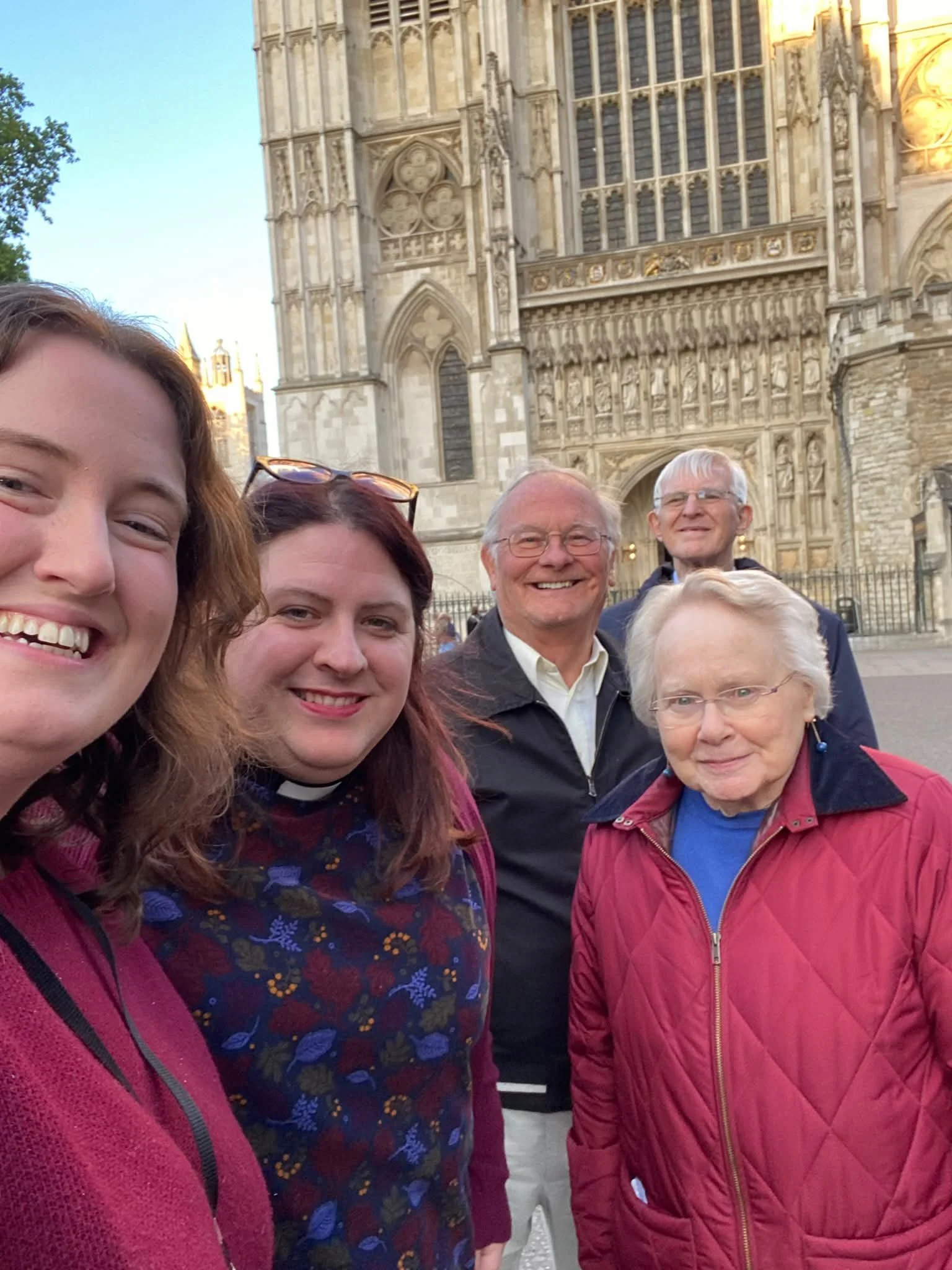
Yesterday (11 May) a few of the ‘Monday Nights@the Vicarage’ group travelled up to London to hear Fr. Christopher Jamison give the 2026 Charles Gore Memorial lecture at Westminster Abbey.
We arrived at the Abbey in time for Choral Evensong, and were treated to VIP seats in the Quire before enjoying a few minutes to look around the Abbey before the lecture began.
Fr Christopher Jamison (OSB) is a Benedictine monk and former Abbot of Worth Abbey in West Sussex.
His title for the lecture was ‘‘Lord, we do not know where you are going’: A Benedictine Guide to the Future’. He spoke about how the Benedictine rule, and particularly the vows which members of Benedictine religious communities take, could be helpful in helping us to navigate an increasingly complicated and chaotic world.
Benedictines take vows of stability, faithfulness to living the monastic life, and obedience. Fr. Jamison spoke about how this stability was more than just staying strong, or staying put. Instead it had three dimensions: Stability of heart, stability of community, and stability of place.
Stability of heart is concerned not just with a deep knowledge and acceptance of self, but also a deep-rooted anchor in God. Rather than the modern focus on ‘mindfulness’, Fr Jamison drew on the work of Peter Tyler who suggested that this dual rootedness for Christians might better be described as ‘heartfulness’. It was this heartfulness, Jamison argued, that ‘Stability of heart enables us to love people unselfishly with a pure heart. A disorderly heart pulled in all directions cannot focus on other people and their needs’.
This ‘stability of heart’ cannot be achieved on it’s own, however. It needs stability of community - that support and encouragement from other pilgrims on our Christian journey who walk alongside us, joining in a pattern of prayer and worship, and know us well enough to call us out when we need it - and stability of place - those buildings and places that anchor us and help to point us to God.
For Benedictines, Jamison argued that the monastic community and the monastery itself fulfilled these needs. But that for those who aren’t members of religious communities, we can still foster them in the places that we are through the churches and faith communities that we are part of, and through turning our everyday places into places that help to point us to God. ‘Monastic stability is not so much about natural beauty as about creating a physical environment that fosters closeness to God’, he suggested. ‘Benedictine stability is not simply staying in one place. It is rather the skill of making any place into a thinplace, a place where the presence of God is felt.’
Jamison went on to consider how we could apply these principles to our lives and the world and offered them as a guide and set of tools by which we might look to navigate the challenges of our modern world and political climate.
We all thoroughly enjoyed the lecture, afterwards dissecting it over a well earned bite to eat before returning to Waterloo to catch the train home.
If you would like to watch the lecture yourself, the link to the Abbey’s Youtube page is below.